Where the Most Expensive RV Water Damage Usually Begins
For years, RV owners have been told to watch the roof for leaks.
After seven years of structural leak investigations, a different pattern became clear.
Many of the
most expensive water problems begin at the sidewalls — not the roof.
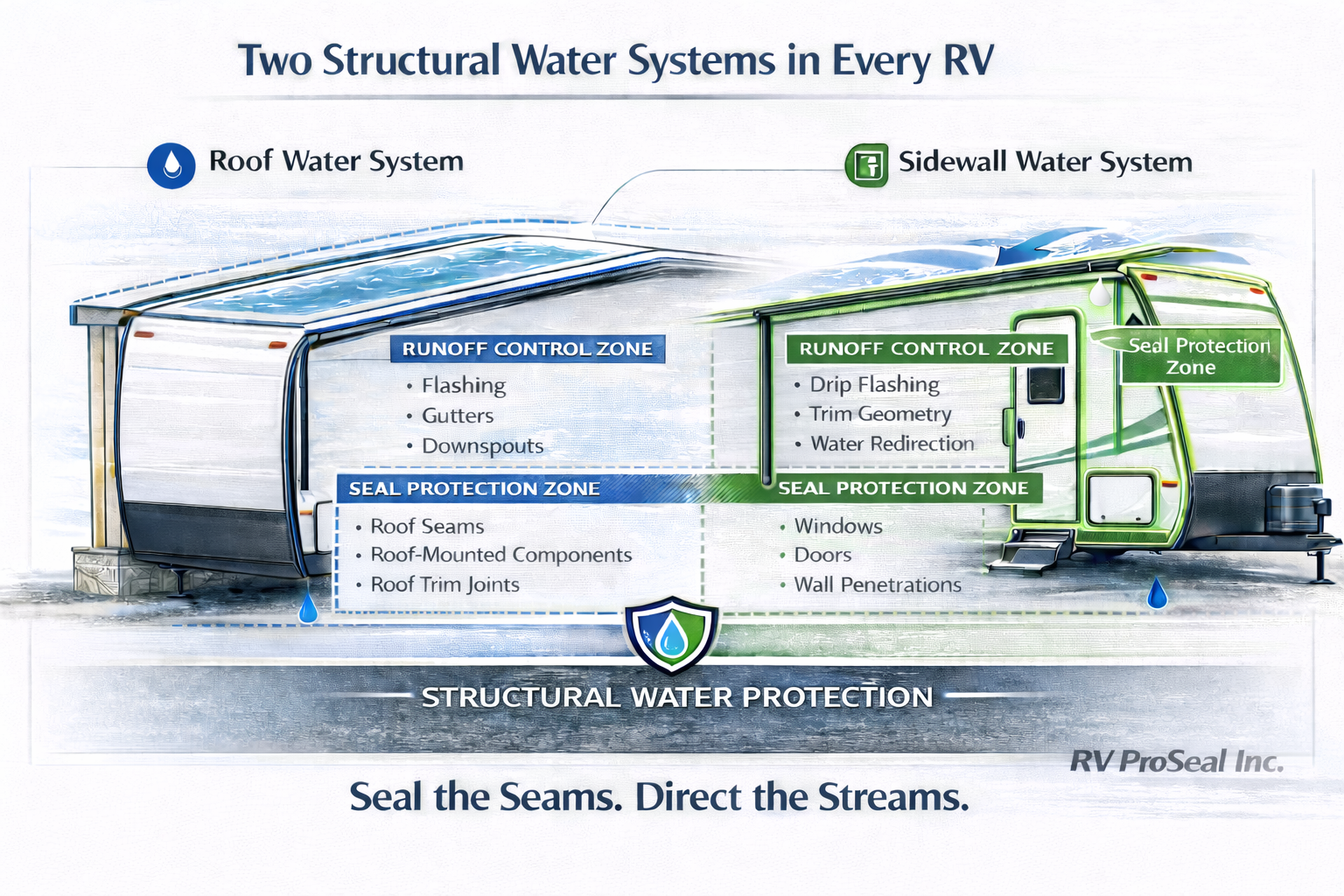
Every RV contains two structural water systems:
• The
Roof Water Management System
• The
Sidewall Laminated Wall System
Most RV maintenance focuses on the roof membrane and surface sealants.
But protecting the structure from water damage requires understanding both systems — and how water moves across them.
We say: Seal the Seams. Direct the Streams.™
What 7 Years of Leak Investigations Revealed
Proven Through Field Investigation
After years of investigating RV leaks, several patterns became impossible to ignore.
Most owners assume their RV was designed to manage rainwater with long-term effectiveness. In reality, several hidden factors from design to build of materials cost restraints provides owners with minimual waterproofing relying on temporary sealants requiring frequent, costly and ongoing annual maintenance.
Four Key things Revealed
Runoff paths often direct large volumes of water repeatedly across vulnerable seals. Concentrated volumes over unknown or unnoticed failed seals is a high risk zone.
Exterior penetrations and openings — such as windows, lights, doors, and trim — depend primarily on exterior sealants. When those seals are damaged from travel or eventually fail, there is little to nothing behind them to stop moisture from entering the structure.
Frame flex and body movement from travel - Speed bumps in campgrounds, potholes in unpaved roadways, are a couple of examples that can stress the frame and body assembly.
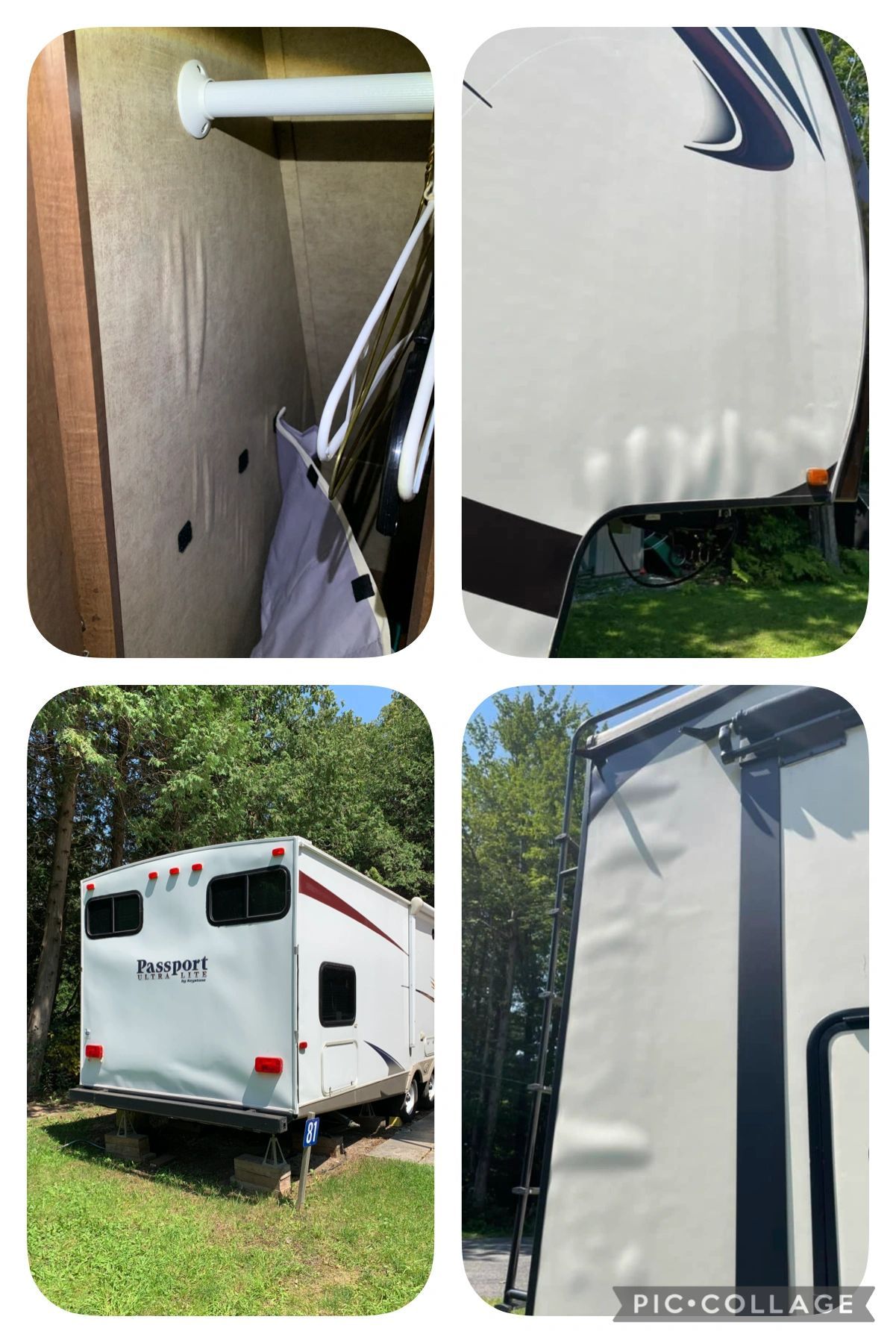
Sidewall Delamination - When moisture slowly migrates into laminated wall structures, the result can be sidewall delamination, one of the most expensive structural failures in an RV.
Many owners are shocked to learn that delamination repairs can exceed $10,000–$25,000, sometimes costing more than a full roof replacement.
These patterns are what ultimately led to the development of the Structural Water Protection System™.
These real-world inspections revealed consistent patterns in how water enters RV structures — patterns that often remain hidden until significant damage appears.
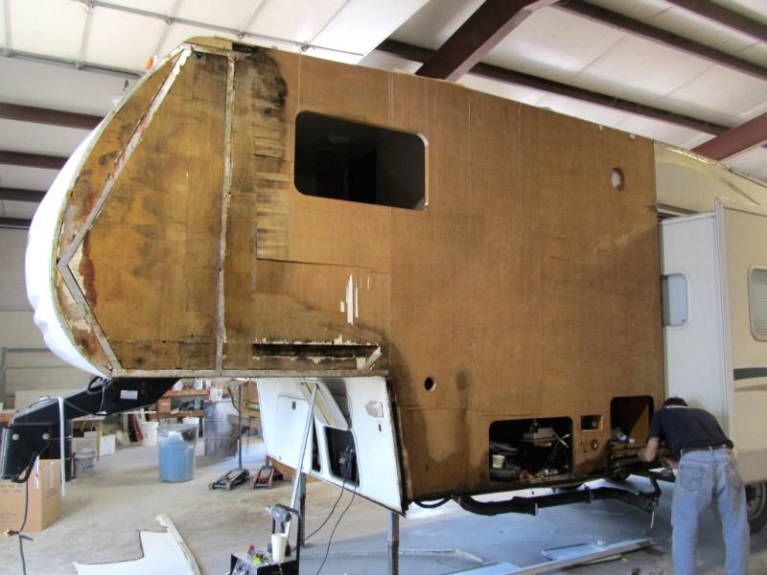
Look at the following runoff pattern below and why runoff management matters.
Why Water Movement Matters
Sometimes design layouts should be questioned.
Unlike residential construction, most RVs do not include roof overhangs or complete gutter systems.
Managing water movement is just as important as sealing seams, joints, trims, vents, windows, etc.
Repeated runoff exposure concentrates large volumes of water at critical joints & openings. Remember, RVs also shake, rattle and flex during travel. They experience temperature expansion and contraction. Seal joints are constantly under stress creating voids, breaks and adhesion failures.
Rainwater frequently flows directly across:
• Roof to wall transitions & vents
• Slide-out openings
• Corner trim joints
• Windows and other wall penetrations (holes cut in sidewalls for cargo storage, water inlets, venting, etc.)
What Happens When Moisture Reaches Laminated Wall Edges
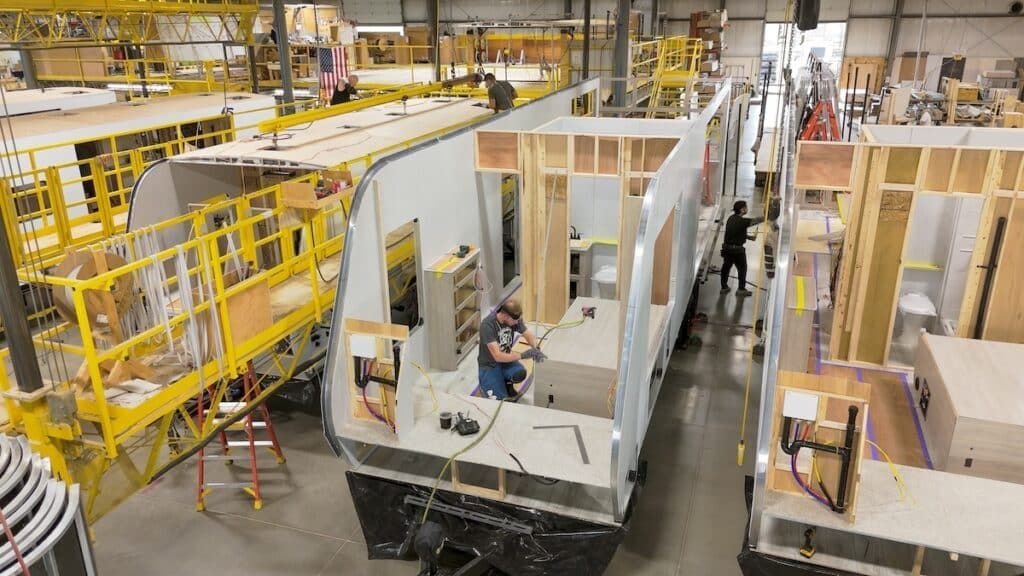
Laminated RV sidewalls are constructed by bonding multiple layers together, typically including:
- fiberglass or gel-coat exterior panels
- structural substrates
- insulation layers
- internal framing
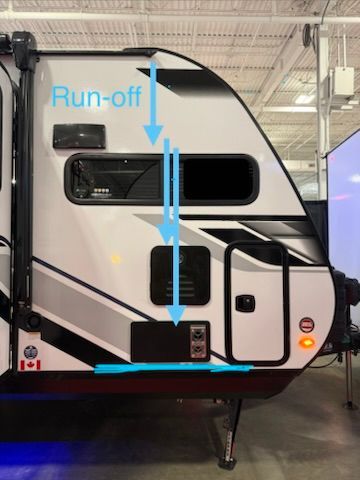
When water enters this assembly, the bonding layers begin separating.
This condition is known as sidewall delamination.
Because laminated walls are bonded structures, repairing delamination often requires partial or full wall reconstruction or replacement.
Many RV owners are surprised to learn that repairing sidewall delamination can quickly escalate to $25,000 or more once structural wall sections must be rebuilt or replaced.
Designed for RVs Already on the Road
Factory sealing and water runoff decisions occur during RV manufacturing.
We focus on better Structural protection designed for finished RVs already in service, where travel, weather exposure, and maintenance history affect water intrusion risk.
Our Structural Water Protection System improves how water is managed around critical seams and penetrations by improving seal redundancy, strengthening how seams resist water intrusion, and better control runoff away from vulnerable areas.
Why Every Area Can Not Be Treated
RVs are assembled in layers during manufacturing. Once the trailer is complete, some structural joints and internal seams can no longer be accessed without major disassembly.
The Structural Water Protection System can focus on reinforcing the various joints and penetrations where water most commonly enters the roof and exterior wall structures.
While no system can eliminate all risk in a finished RV, addressing these high-risk areas can significantly reduce the likelihood of hidden moisture intrusion.
Our Structural Protection System
A framework designed to improve seal redundancy, runoff control, and protection at critical sealed areas.
Tier 1
Structural Leak Assessment™
Non-invasive leak testing, including pressure testing and structural evaluation of both water systems.
This includes:
- Seal Integrity Inspection
- Moisture/Leak Assessment
- Photo findings summary
- Pass/Fail outcome
- Budget estimate if leak sealing is needed
This process identifies:
• Openings exposure
• Active intrusion paths
• Sealant fatigue zones
• Moisture migration patterns
• Potential failure points
You receive documented image findings before any corrective work is recommended.
Tier 2
Leak Correction & Water Management
Correct confirmed intrusion points with an option to improve runoff control and individual area improvements.
NEW!
Where appropriate, we can apply Seal Integrity and Runoff Control designed to reduce runoff exposure at vulnerable areas.
These improvements can include:
• Seal correction at failure points
• Flashing improvements
• Runoff control improvement
• Drainage improvements
• New Multi-Seal™ integrity
Stops active leaks and reduces exposure risk.
Tier 3
Structural Water Protection System™
NEW!
A comprehensive approach designed to strengthen both structural water systems in finished RVs.
This tier addresses the two major protection components:
Roof Water Protection
- Major corrective waterproofing
- Runoff control products
- New Multi-Seal™ integrity for all penitations.
- Professional RV storage cover
Sidewall Protection
Delam Defense System™
Delam Defense for fiberglass / Gel coated sidedwalls reinforces high-risk wall penetrations and trim joints to reduce long-term delamination risk.
- Major corrective waterproofing
- Runoff control products
- Body resealing
- New Multi-Seal™ integrity for many penetrations.
This compressive system further includes:
- Post work leak testing validation
- Certified Waterproofing Seal
- Transferable Warranty
Who This Is Best For?
Owners who prefer professional evaluation before investing in resealing or other work.
Typically best for:
• Laminated fiberglass travel trailers (Exterior Delamination Risk)
• Aluminum sided travel trailers (Compromised "S" joint seepage Risk)
• Units 1–15 years old
• Owners who want multiple layers of protection, not the sole dependence on sealant alone.
• Owners planning resale
• Owners preparing or returning from major trips
• Owners who prefer documented professional work
Why Owners Choose Delam Defense™ System
Even early-stage wall separation can significantly affect trade-ins and resale negotiations because repair costs can exceed the value of the trailer in many cases.
Structured sidewall protection strengthens confidence for:
• Future buyers
• Dealers evaluating trade-ins
• Long-term ownership planning
Request Delam Defense™ Evaluation
If you would like to protect your laminated sidewalls before visible issues develop, we can determine whether your RV is a good candidate.
Service Pricing Range
Because every RV is configured differently, the scope of structural water protection varies depending on size, wall layout, and the number of penetrations involved.
Major structural water damage can require roof replacement ($8k–$15k) or laminated wall repair ($10k–$25k+), which is why many owners choose to understand their risk before damage becomes structural.
Tier 1Structural Leak Assessment
- Exterior seal inspection,
- Pass/fail determination,
- Identification of leak-risk areas,
- Corrective pricing where deficiencies are found.
Tier 2Leak Correction &Added Water Management
Tier 3Structural Water Protection System™
Book a Structural Leak Assessment
Structural Leak Assessment™ is the process used to evaluate both structural water systems and identify potential intrusion paths.
The goal is not simply to reseal visible joints, but to understand how water may be interacting with the RV structure.
This process uses non-invasive testing methods including:
- pressure leak testing
- bubble testing
- targeted seal inspection
- other non-destructive testing methods
These methods help identify leak paths from the inside out starting with the primary hidden seal, not just exterior visible caulking.
<script>
(function(e,t,o,n,p,r,i){e.visitorGlobalObjectAlias=n;e[e.visitorGlobalObjectAlias]=e[e.visitorGlobalObjectAlias] function(){(e[e.visitorGlobalObjectAlias].q=e[e.visitorGlobalObjectAlias].q []).push(arguments)};e[e.visitorGlobalObjectAlias].l=(new Date).getTime();r=t.createElement("script");r.src=o;r.async=true;i=t.getElementsByTagName("script")[0];i.parentNode.insertBefore(r,i)})(window,document,"https://diffuser-cdn.app-us1.com/diffuser/diffuser.js","vgo");
vgo('setAccount', '477471347');
vgo('setTrackByDefault', true);
vgo('process');
</script>