What 7 Years of RV Leak Investigations Revealed

March 16, 2026

The Hidden Patterns Behind Some of the Most Expensive RV Water Damage

For most RV owners, water damage seems straightforward.


A seal cracks.
Water gets in.
You reseal it.

Problem solved.


At least that’s what many people assume. 


But after years of investigating RV leaks, that explanation is incomplete.

Because the same types of damage kept appearing, even on RVs that owners believed had been properly maintained.


Something else was happening.

And the pattern began to repeat itself.

The First Pattern: Water Doesn’t Always Go Where Owners Expect 

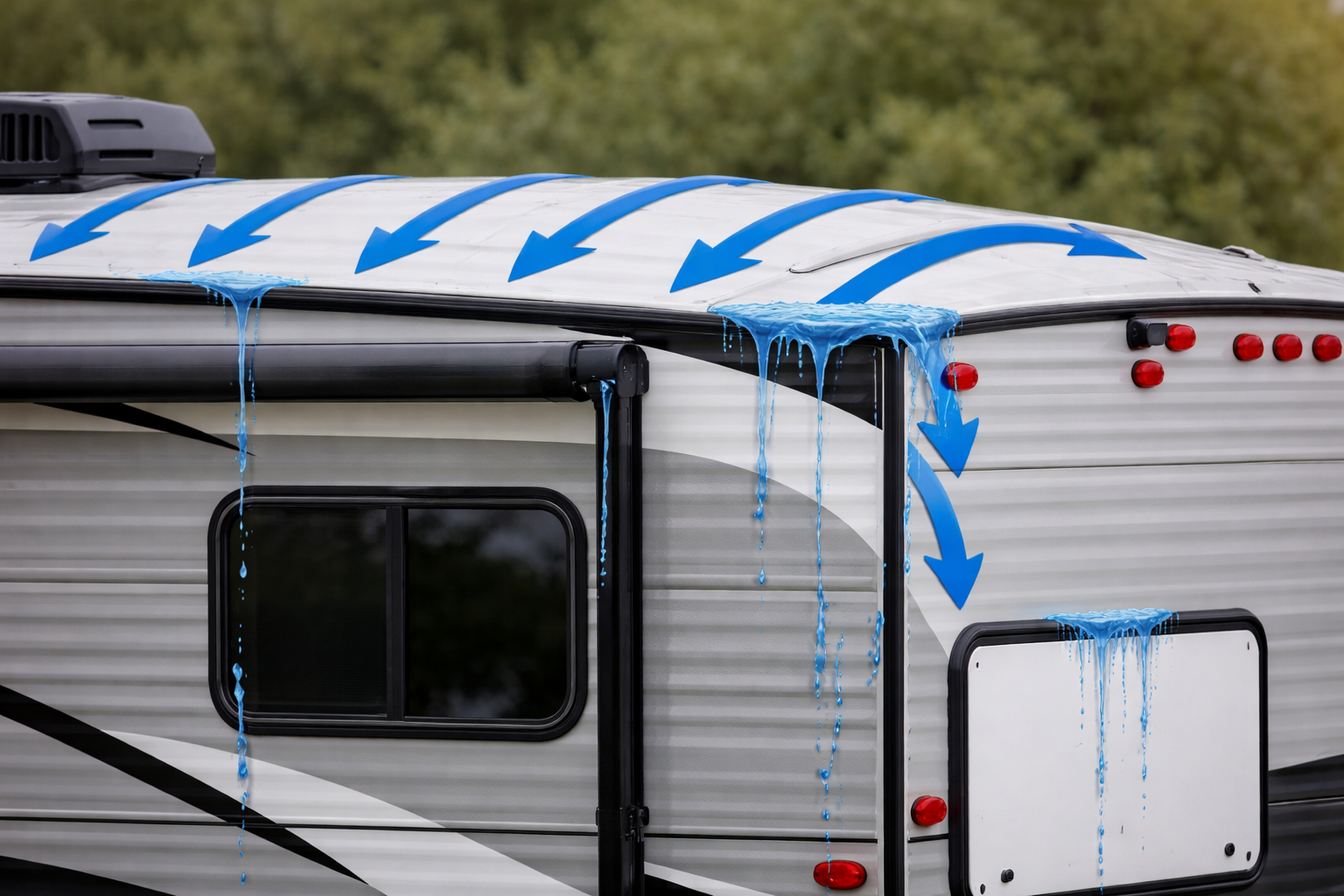
Most owners think of their RV roof like a house roof. Rain hits the surface and runs away.


But RV roofs behave differently.


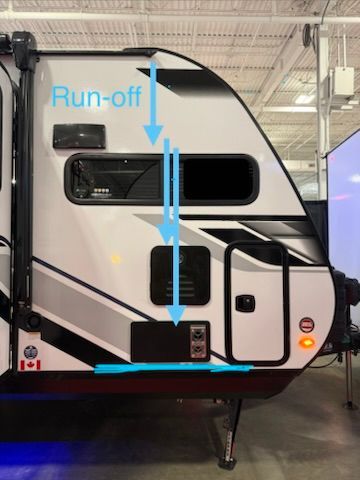
Unlike a house, most RVs have minimal overhang and limited gutter capacity. When rain falls, large volumes of water can move across the roof surface and repeatedly flow over the same structural areas.


Over time, that runoff often concentrates around seams, trim, and penetrations.


When those seals begin fail water has repeated opportunities to find its way inside.


This isn’t always obvious for owners doing their own inspections.


But during leak investigations, the pattern appears again and again.

The Second Pattern:  Most Openings Rely on Sealants Alone

RV sidewalls contain many openings:


  • Windows
  • Doors
  • Slideouts
  • Lights
  • Water Inlets
  • Trim rails
  • Marker lights

Each of these penetrations interrupts the wall structure.


In many RV designs, the primary protection around those openings is exterior sealant.


Sealants work well for a limited time.


But they are also exposed to:

• UV radiation

• temperature changes

• road vibration

• structural movement during travel


Eventually, sealant ages or fails under mechanical stress. When that happens, many penetrations have very little protection other than sealant to stop moisture from entering the wall structure.  The leak may not appear immediately inside the RV.  Instead, moisture can migrate slowly into the wall assembly.


And that leads to the third pattern.

The Third Pattern: RV Structures Move More Than People Realize

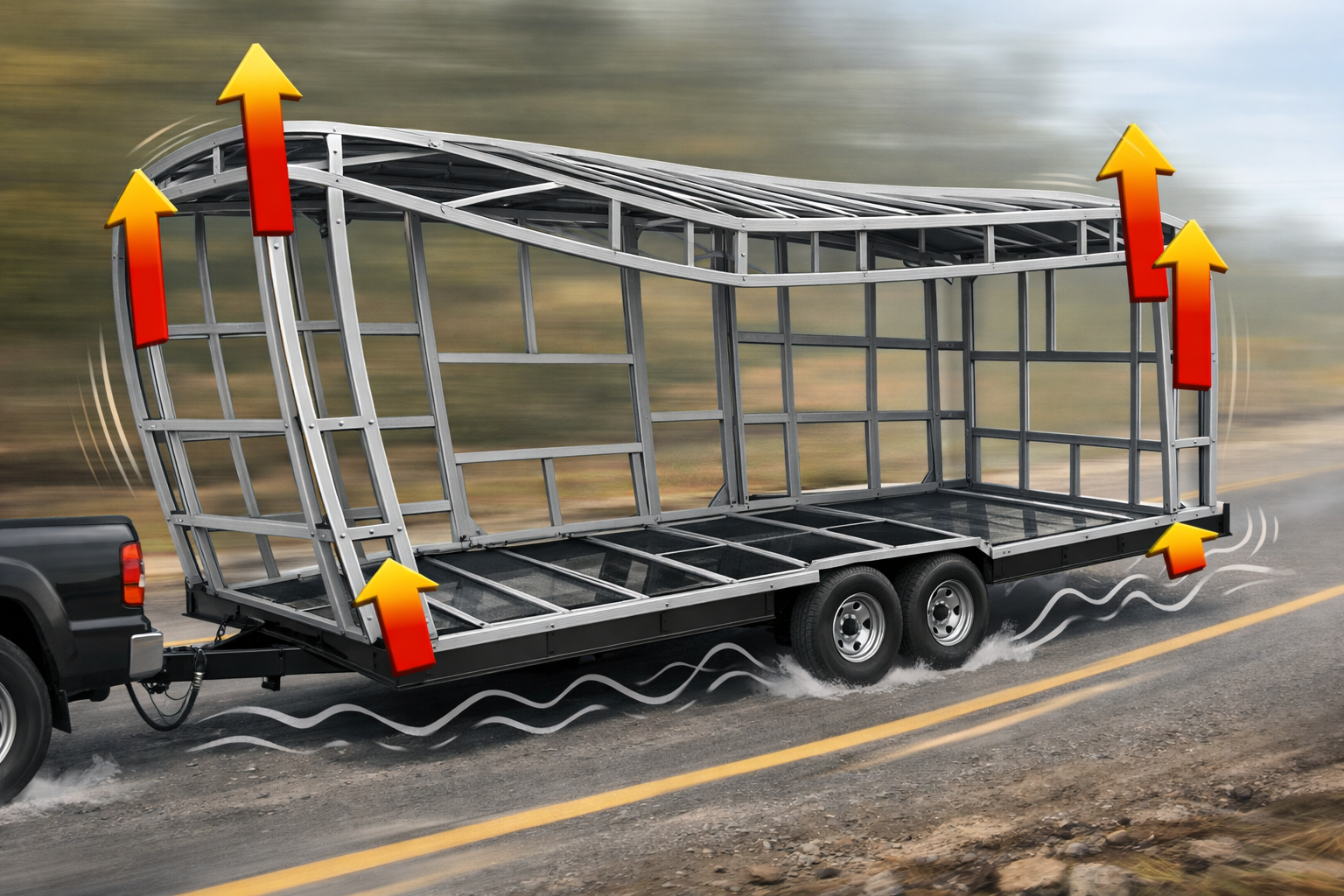
Anyone who has towed a trailer has experienced it.  Open a kitchen cabinet after a long drive and things inside have shifted.


That same movement happens throughout the RV structure.  Road vibration, potholes, campground speed bumps, and highway expansion joints all cause small amounts of flex within the frame and body.


Over time, that movement places constant stress on sealed joints.


Most seals are not designed to carry structural loads.


Yet in many cases they end up doing exactly that.

The Fourth Pattern: Delamination Starts Long Before Owners See It

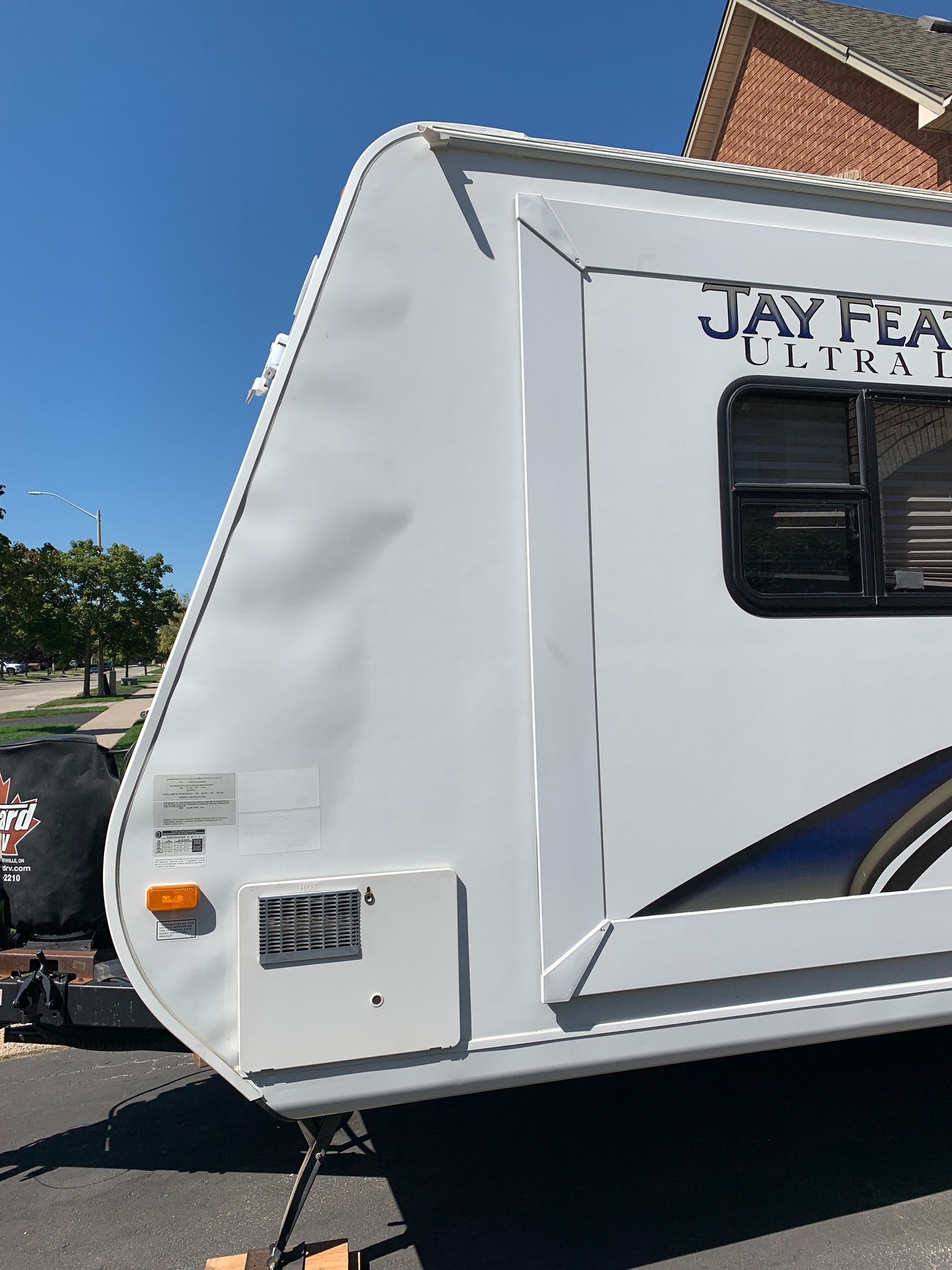
One of the most expensive structural failures in RVs is sidewall delamination.


Delamination occurs when moisture enters a laminated wall assembly and begins to separate the bonded layers of fiberglass, adhesives, and structural materials.


The problem is that it rarely appears suddenly.


Moisture can migrate slowly inside the wall structure for months — sometimes years — before visible signs appear.


By the time bubbles or waves show up on the sidewall, the damage inside the wall may already be significant.


Many owners are surprised to learn that delamination repairs can exceed $10,000–$25,000, depending on the extent of the damage.


In many cases, it can cost more than replacing the entire roof.

The Pattern Behind the Patterns

Individually, each of these issues might seem manageable.  But during leak investigations, they often appear together:

  •  Runoff exposure
  • Seal-dependent penetrations
  • Structural movement
  • Hidden moisture migration


These factors create conditions where water can enter slowly and remain unnoticed until significant structural damage develops.

Once that pattern became clear, it raised an important question.

If these patterns repeat across many RVs, is there a better way to manage the risk?

A Different Way to Think About RV Water Protection


Traditionally, RV leak prevention focuses on maintaining exposed sealants.

Inspect the roof.
Touch up the sealant.
Reseal joints when needed.


Maintenance is important.


But the investigation patterns suggested that long-term protection also requires attention to how water moves across the RV structure, and how seals are supported when they eventually age or fail under movement.


This realization led to the development of a new approach.

The Structural Water Protection System™

The Structural Water Protection System™


The Structural Water Protection System™ was developed specifically for finished RVs after years of investigating leak patterns.


Rather than focusing only on exposed sealants, the system addresses several structural factors revealed during investigations.


 It evaluates:


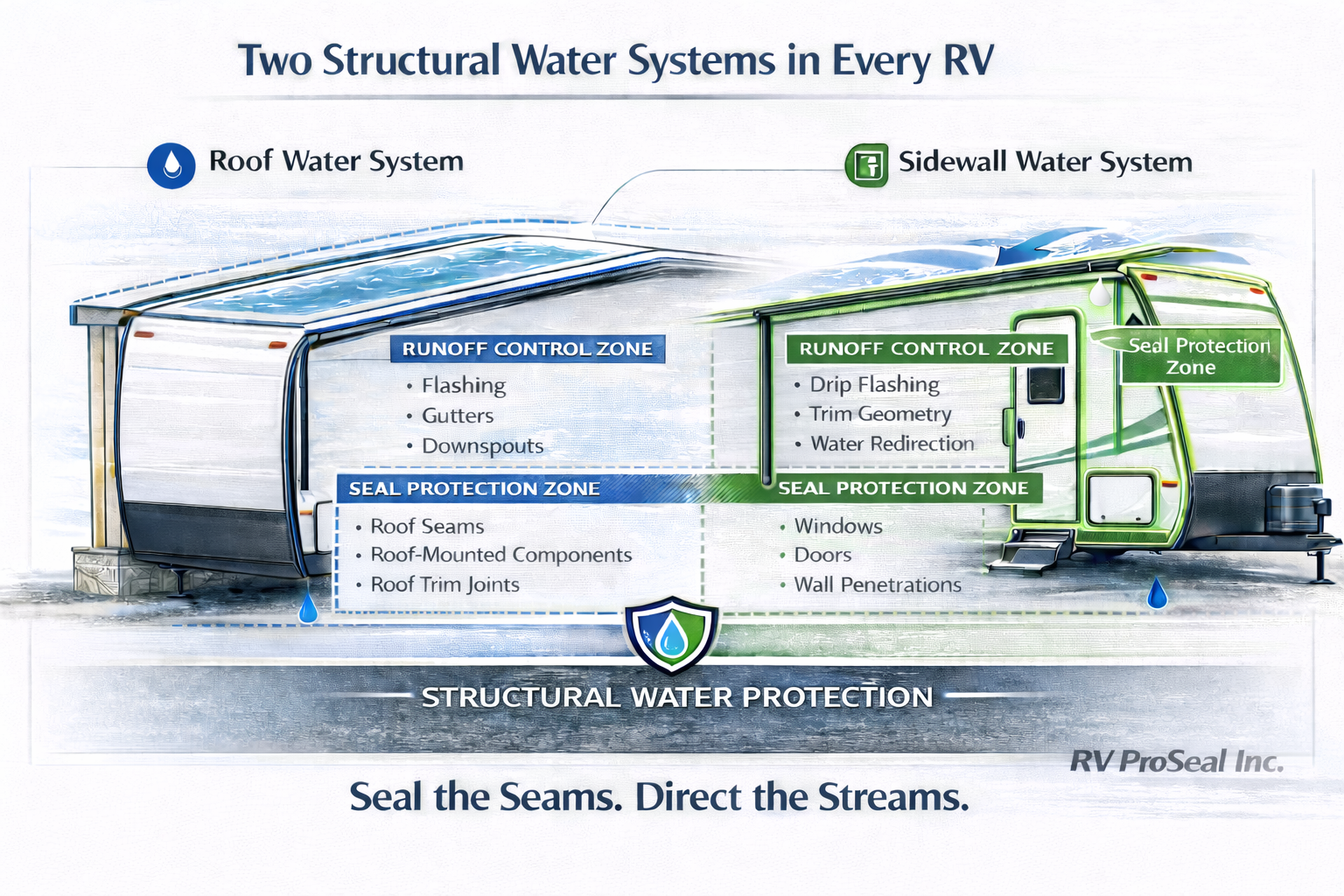
• runoff exposure across vulnerable joints

• penetrations that depend primarily on exterior sealants

• areas where structural movement stresses sealed joints

• locations where moisture could migrate into laminated walls


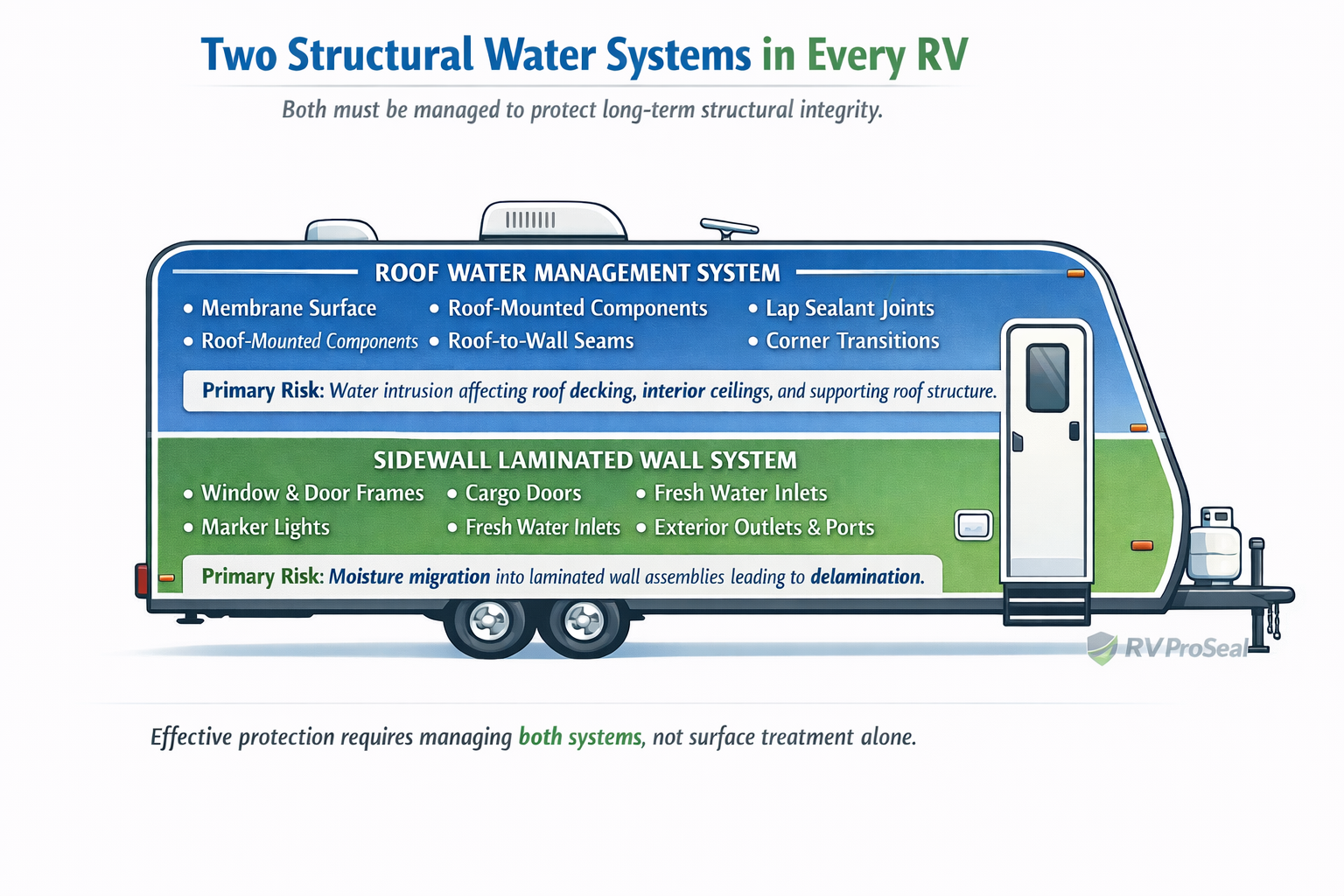
The goal is to strengthen water protection for both structural water systems in the RV:

Roof Water Management System

Sidewall Laminated Wall System


By understanding the patterns revealed during leak investigations, owners can make more informed decisions about protecting their RV structure.

Understanding the System


This article explains what leak investigations revealed.

The next step is understanding how the Structural Water Protection System™ works and how it addresses these patterns and pricing.

See How the Structural Water Protection System

You might also like

September 11, 2025
When rain starts sneaking through your roof seams or a skylight gasket lets go, the goal is simple: stop the water now and protect the interior until a mobile repair technician can take over. The steps below are road‑tested, safe, and meant to buy you time without creating a bigger mess for later. Think of this as a first‑aid kit for your RV’s seals. First, stay safe Water and height are a risky pairing. Before anything else: Park on level ground, set the brake, and wait out lightning or high winds. Turn off 120V power at the breaker if water is near outlets or fixtures. Use a stable ladder with a spotter. Shoes with a good grip beat flip‑flops every time. If conditions aren’t safe, pause and call mobile repair right away. Fast triage: find the source Leaks can travel along framing and show up far from the entry point. Start at the top and work down: Usual suspects: roof vents, skylights, AC shrouds, antenna mounts, front/rear cap seams, and ladder or rack penetrations. Edges and corners: perimeter mouldings and gutter rails often hide hairline gaps. Slide‑outs: torn wipers or flattened bulb seals let water wick inside. Windows & marker lights: failed butyl behind the flange; don’t confuse this with condensation. Wipe suspected areas dry with a microfibre cloth and watch for fresh trails. If you can’t pinpoint it quickly, stabilize the area with a tarp (details below) and book mobile repair. Your roadside leak kit (pack it now) Microfibre cloths and paper towels Isopropyl alcohol (70–99%) for surface prep Plastic scraper and utility knife Butyl tape (for flanges) RV roof repair tape (micro‑sealant tape) Non‑sag sealant for vertical seams; self‑levelling for horizontal laps Clear plastic sheeting and painter’s tape Soft roller for tape activation Nitrile gloves and safety glasses Small tarp, paracord or ratchet straps, and a pool noodle or foam ridge Temporary fixes that hold (without causing new problems) General rules: Clean, dry, then patch. Alcohol wipe → dry → apply. Warm products stick better; keep tapes/caulks inside the coach until use. Avoid silicone on EPDM—it rarely bonds well and complicates the permanent fix. EPDM or TPO rubber roofs Small seam or pinhole: bridge with roof repair tape, extending at least 50 mm (2") past the damage on all sides. Roll firmly to activate the adhesive. Cracked lap sealant at a vent: scrape loose debris, wipe, then add self‑levelling sealant around the flange. If rain is active, dry the area to be caulked, apply of the crack & keep dry for at least till it skins over by tenting the zone. Sit, wait the hour, double check for skinning, remove the tenting and double check at your next stop. Fiberglass or aluminum roofs Hairline crack: Clean, dry, and apply repair tape. To avoid wrinkles, make relief cuts in the tape for curved corners. Loose trim screws: back out, add a tiny piece of butyl under the screw head, and snug (don’t strip). Cap with a dab of non‑sag sealant. Skylights and roof vents Leaking flange: Do the same as listed above under Cracked Lap sealant at a vent. Cracked lid: lay plastic sheeting over the lid and tape it to the housing as a rain bonnet. Replace the lid at the next stop. Slide‑outs Torn wiper seal: Open the slide if safe, and add a temporary “gasket” from an old bike rubber inner tube cut to bridge the rip using rubber adhesive. Have the wiper seal replaced as soon as possible. Split bulb seal: Same advice as above. Windows and marker lights Top‑edge weep: run painter’s tape as a small “drip cap” over the frame to shed water. Important: never block factory weep holes at the bottom of window frames. Tarping the right way (so it doesn’t pool or flap) A sloppy tarp can cause more damage than a shower. For short drives or overnight: Create a peak with a pool noodle in the center to shed water. Anchor cords to frame points or wheels— not to awning arms or gutters. Pad sharp edges with towels to protect the roof membrane. Keep the tarp tight; loose fabric will flap and scuff the roof. Dry the inside and prevent mold. Catch drips in pans; swap towels often. If you have shore power, run a small fan and a dehumidifier. Open cabinet doors near the leak to help air circulate. Wipe down wet wood trim quickly; standing water leaves stains and invites mold. When to stop and call a mobile repair technician immediately A tear larger than your hand Bulging or sagging ceiling panels Water near electrical panels, flickering lights, or a burning smell Storm conditions that make roof access risky At this point, containment (tarp and towels) is the smartest move. Book mobile repair and document everything. Document for a smooth hand‑off Take photos of the leak path, the roof area, and each temporary patch. Note the products used and the time you applied them. Keep any loose parts (old screws, cracked lids) in a labelled bag. This record helps the mobile repair technician plan materials and speeds up the permanent fix. What your tech will likely do next There are a couple of things you can learn from professional RV inspection services . For one, expect a moisture survey with a meter, a controlled removal of temporary patches, proper surface prep, and compatible sealant or tape systems matched to your roof type. If hidden damage is found, they’ll propose a step‑by‑step repair plan so you’re not guessing. Need help now? If you’re on the shoulder with water finding its way in, patch what you can and reach out. RV Pro Seal offers on‑site, professional mobile repair in Oakville for roof and leak issues—fast, friendly, and done right. We’ll get you watertight and back on the road with clear after‑care instructions.

June 20, 2025
Have you ever considered your RV more than just a vehicle? For many of us, it is a mobile home, an adventure base, and a significant investment. Like any valuable asset, your RV needs consistent care to stay in top shape and serve you for years. Regular RV resealing services are one of the most overlooked yet absolutely critical aspects of RV maintenance. This simple process can dramatically extend your RV's lifespan and save you from major headaches. The Unseen Threat: Why RVs are Vulnerable to Leaks Imagine your RV cruising down the highway, basking in the sun, or weathering a rainstorm. All these conditions put stress on its exterior. Temperature changes cause materials to expand and contract, road vibrations challenge every seam, and even seemingly harmless sun exposure can degrade sealants over time. These factors create tiny openings, almost invisible to the naked eye, where water can start its insidious journey into your RV's structure. So, what happens when water gets in? Structural Damage: Water can rot wooden frames, delaminate walls, and corrode metal components, weakening your RV's integrity from the inside out. Mold and Mildew: A damp environment is a perfect breeding ground for mold and mildew. These not only create unpleasant odours, but they can also pose serious health risks. Electrical Problems: Water and electronics do not mix. Leaks can short-circuit wiring, leading to costly repairs and potential safety hazards. Reduced Resale Value: A water-damaged RV will fetch a much lower price when it comes time to sell. No one wants to buy a rig with hidden issues. This is why proactive care, like consistent resealing and swift RV water leak repair , is not just about comfort; it is about preserving the very foundation of your investment. The Power of Prevention: How Sealing Maintenance Keeps Your RV Healthy Regular sealing maintenance acts as a robust shield, guarding your RV against the elements. Properly applied sealants create a watertight barrier over every seam, joint, and penetration on your RV's exterior – from the roof and windows to the cargo doors and vents. When you invest in professional waterproofing maintenance, you are not just getting a quick fix. You are ensuring: Long-Term Protection: High-quality sealants are designed to withstand UV rays, extreme temperatures, and vibrations, offering durable protection for years. Early Detection: During a resealing service, technicians meticulously inspect every inch of your RV, often catching potential issues before they become major leaks. This attention to detail is crucial for effective RV water leak repair . Expert Application: To use sealants properly, you need to know how to do it and have the right tools. Experts make sure there is good bonding and a smooth, even seal that really keeps water out. Tips for Keeping Your RV Leak-Free Want to be proactive about protecting your RV? Here are a few straightforward tips: Bi-Annual Seal and Sealant Inspections: Get up on a ladder a few times a year and visually inspect all seams and sealants on your roof and sidewalls. Look for cracks, shrinking, or areas where the sealant has pulled away. Feel for Soft Spots: Gently press on the walls, roofs and ceiling, especially near windows, vents, and lights. Any soft or spongy areas could indicate water damage. Address Issues Immediately: If you spot a problem, do not wait! Even a small drip can quickly escalate. Prompt RV water leak repair can save you thousands in the long run. Professional Check-ups: Consider having your RV professionally inspected and resealed every 2-5 years, depending on usage and climate. This is especially important if you are not comfortable doing the inspections yourself. By committing to regular resealing and partnering with a trusted RV leak testing company in Oakville , you are not just performing maintenance; you are making a wise decision that protects your significant investment. You are ensuring more enjoyable trips, fewer headaches, and a higher resale value when the time comes. Are you ready to give your RV the long, healthy life it deserves?
RV pre purchase inspection, Rv inspection services, Oakville ON
By David Pollard April 22, 2025
Considering an RV pre purchase inspection? Our RV inspection services in Oakville ON uncover leaks and hidden issues, photo reports for confidence.
More Posts

Book a Service Today